1. Why change is needed
In the Netherlands, the honey bee (Apis mellifera) is generally regarded as a managed agricultural animal. Its importance is commonly discussed in terms of beekeeping, agriculture and the pollination of crops.
This view does not do justice to the honey bee’s natural history or its ecological role. The European dark honey bee (Apis mellifera mellifera, or AMM) is the native honey bee of north-western Europe. Over thousands of years, it evolved within European ecosystems and became part of the continent’s natural fauna and landscapes.
Long before organised beekeeping developed, honey bee colonies lived independently in natural cavities in trees and other suitable places. These free-living colonies were part of the ecosystems around them.
The development of modern beekeeping, the importation of other honey bee subspecies, hybridisation and the loss of natural nesting sites have all placed the original position of the AMM under pressure.
Stichting Het Conservatoire believes this trend must be reversed. We are calling for a fundamental change in the way the native honey bee is recognised and treated in public policy, law and nature conservation.
The AMM should be recognised not only as a managed agricultural animal, but also as a native component of Dutch wildlife deserving of protection.
2. A new legal and policy status for the AMM
Stichting Het Conservatoire calls on the Dutch legislator to establish an appropriate, independent basis for the legal protection of the native black honey bee.
A clear distinction must be made between commercial and hobby beekeeping on the one hand, and the natural populations of the native honey bee on the other.
Protection should focus on:
- preserving original Dutch AMM genetic lines;
- preventing further genetic dilution through hybridisation;
- restoring and maintaining genetic diversity;
- safeguarding opportunities for natural reproduction;
- supporting the recovery of free-living honey bee populations; and
- recognising the honey bee as part of the natural landscape.
The AMM should be explicitly included in Dutch nature policy and in the implementation of the EU Nature Restoration Regulation. Its future should not depend solely on the voluntary efforts of individual beekeepers.
3. Protecting genetic identity and restricting imports
One of the factors contributing to the decline of original AMM populations is the spread of other honey bee subspecies and the hybridisation that can follow.
The importation of foreign queen bees can introduce genetic material that does not belong to the original Dutch AMM populations. This makes it increasingly difficult to preserve and restore native genetic lines.
Stichting Het Conservatoire therefore asks the Dutch legislator to introduce a statutory ban on the import of foreign honey bee queens for hobby beekeeping, subject to the requirements and limits of applicable European law.
The primary purpose is to protect the remaining original AMM genetic lines from further hybridisation.
Restricting the movement of imported bees is also relevant to biosecurity. International trade and transport can create pathways for the introduction and spread of pests and diseases, including:
- Tropilaelaps mites;
- the Varroa mite, including the risk of spreading new variants or infestations; and
- the small hive beetle (Aethina tumida).
Varroa is already present in the Netherlands, so the aim is not to prevent its initial introduction, but to reduce further spread and the risk of new infestations. For pests not yet established, prevention of introduction is particularly important.
The Foundation asks the authorities to examine the legal means of achieving these objectives within Dutch and European law. The intention is not to make beekeeping impossible, but to better protect the genetic integrity and biosecurity of the Dutch honey bee population.
4. Breda as a national pilot area for the recovery of the AMM
Stichting Het Conservatoire proposes that the City of Breda be designated as a national pilot area for the return, recovery and conservation of the native black honey bee.
To this end, the Foundation is developing the ‘Bee Landscape of the Old Nassau Forests of Breda’. The approach is based not on isolated nature reserves, but on the connected landscape of the city and its surroundings.
The pilot area would include:
- Breda’s urban environment;
- city parks, gardens and green spaces;
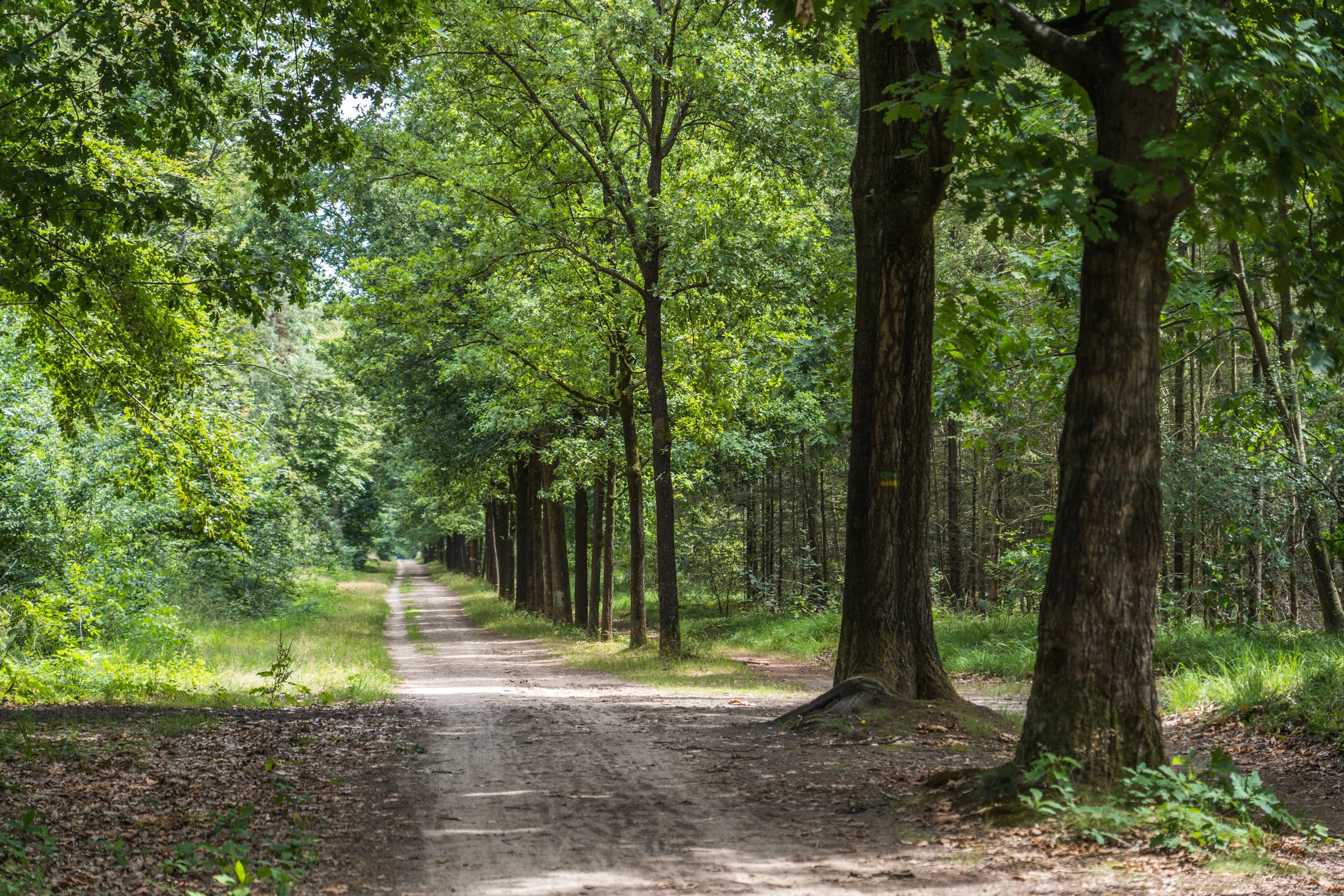
- the historic Old Nassau forests, including the Mastbos, Liesbos and Ulvenhoutse Bos;
- surrounding villages and agricultural land;
- avenues, hedgerows and waterways; and
- ecological corridors and other landscape connections.
The ambition is to restore the AMM’s ecological place in both the urban and natural landscape. The pilot should provide room for genetic conservation, natural reproduction, suitable nesting sites and the development of free-living honey bee populations.
Existing beekeepers, research institutions, land managers, educational organisations and nature conservation groups should all be involved. Breda could become a practical example for other Dutch regions and for Van Gogh National Park.
5. From managed colonies to free-living populations
A central principle of nature restoration is the distinction between managed honey bee colonies and free-living populations.
Free-living honey bees choose their own nesting sites, gather food, swarm and reproduce independently. Nature restoration should once again make room for this way of life.
Stichting Het Conservatoire therefore intends to work towards:
- protecting and providing suitable natural nesting sites;
- recording and monitoring existing free-living colonies;
- restoring original genetic lines;
- supporting natural reproduction; and
- developing a connected landscape in which honey bees and other pollinators can coexist.
Drone colonies from genetically assessed AMM lines may also play a supporting role. Through natural mating, they can help spread native genetic material. They are not, however, a substitute for natural nesting sites or independently living populations.
6. Research and genetic conservation
The protection of the AMM must be grounded in scientific knowledge and results that can be assessed. Stichting Het Conservatoire intends to build on existing international research and the expertise available at, among others, Wageningen University & Research, Naturalis and international networks such as SICAMM.
For Breda, the Foundation proposes beginning with:
- a genetic baseline survey of the local honey bee population;
- research into mitochondrial DNA and historical Dutch haplotypes;
- a baseline survey of free-living honey bee colonies;
- monitoring changes in the genetic make-up of local populations; and
- monitoring the development of the AMM across the connected landscape.
Research should remain practical, affordable and repeatable. Restoring genetic diversity and assessing its effects will take time. The Foundation anticipates a period of at least ten years.
7. Public responsibility and cooperation
The recovery of the native honey bee cannot be achieved through private initiatives alone. Stichting Het Conservatoire therefore calls for the involvement of the Dutch government, the Province of North Brabant and the Municipality of Breda.
Cooperation will also be needed with land managers, nature conservation organisations, beekeeping associations, research institutions and educational organisations.
The Foundation wishes to contribute its knowledge and practical experience to a coordinated, landscape-based approach. Breda can serve as a national example in which legal protection, genetic conservation and ecological restoration are brought together.
8. Our requests to the Dutch authorities
Stichting Het Conservatoire calls on the Dutch legislator and the relevant authorities to:
- Recognise and protect the AMM. Give the native black honey bee (Apis mellifera mellifera) an appropriate, independent status as a component of Dutch native wildlife deserving of protection.
- Protect its genetic identity. Develop measures to safeguard original Dutch AMM genetic lines against further hybridisation.
- Restrict imports. Introduce a statutory ban on the import of foreign honey bee queens for hobby beekeeping, within the framework of applicable European law.
- Strengthen biosecurity. Improve measures to prevent the introduction and spread of non-native bee pests and pathogens.
- Designate Breda as a pilot area. Make the City of Breda a national pilot area for the return, recovery and conservation of the native black honey bee in the urban and natural landscape.
- Support scientific work. Enable targeted genetic research, monitoring and international exchange of knowledge.
- Include the AMM in nature restoration policy. Give the protection and recovery of the native honey bee an explicit place in the implementation of the EU Nature Restoration Regulation and the Dutch National Restoration Plan.
9. Our vision
Stichting Het Conservatoire believes that the honey bee must once again have an independent place in Dutch nature policy.
The native black honey bee is more than a production animal kept for beekeeping. It is an original inhabitant of the European landscape.
We want to make the following transition possible:
- from agricultural animal to protected native honey bee;
- from genetic erosion to genetic recovery;
- from managed colonies alone to space for free-living populations; and
- from isolated private initiatives to shared public and governmental responsibility.
By making Breda a national pilot area, Stichting Het Conservatoire wants to show how this change can be put into practice.
Our ambition is a Dutch landscape in which the native black honey bee can once again take its natural place.