The Oude Nassaubossen bee landscape in Breda
Nature restoration begins with connectedness.
Among the forests, stream valleys, avenues and green corridors around Breda lies a landscape of great ecological significance. The Oude Nassaubossen bee landscape in Breda aims to contribute to restoring and strengthening this connected landscape, with particular attention to the native dark honey bee (Apis mellifera mellifera) and free-living honey bee colonies.
The focus is not on a single nature reserve, but on the landscape as a whole: its connections, the quality of habitats and the opportunities for species to survive and spread within it.
The honey bee as part of the landscape
The honey bee is a natural part of European ecosystems. Alongside managed colonies, free-living colonies also deserve attention: honey bee colonies that find their own nesting sites and complete their life cycle within the landscape.
The project aims to investigate the significance of these colonies, the living conditions they need and their relationship with other pollinators and existing ecological values. The dark honey bee, the original honey bee subspecies across much of northwestern Europe, is a particular focus.
Restoration requires a careful approach. Wherever possible, the presence of free-living colonies, their genetic background and their ecological effects should be studied and monitored.
Adriaen Thomasz. Key — Mauritshuis, Den Haag. Reproduction via Wikimedia Commons, public domain (PD-Art).
Image sourceFrom separate nature reserves to a connected landscape
The Oude Nassaubossen are the starting point for a broader landscape approach. Forests such as the Mastbos, Ulvenhoutse Bos and Liesbos can be considered together with other nature areas, hedgerows, avenues, waterways and green corridors.
Ecological corridors are important in this context. They help counter fragmentation and allow movement between habitats. The project aims to explore where landscape connections can be strengthened and how conditions for honey bees and other species can be improved.
Possibly after Antonio Moro — Royal Collections of the Netherlands, SC-0069. Reproduction via Wikimedia Commons, public domain (PD-Art).
Image sourceContributing to Brabant’s nature restoration goals
The European Nature Restoration Regulation (EU 2024/1991) provides a framework for restoring degraded ecosystems and strengthening nature’s resilience. The Netherlands is developing a national nature restoration plan to implement it.
The province of Noord-Brabant is also working to strengthen the Natuurnetwerk Brabant, restore nature areas and develop ecological corridors. This area-based approach aligns with Van Gogh National Park’s ambition to connect nature, landscape, water, agriculture and the living environment more closely.
The Oude Nassaubossen bee landscape in Breda aims to contribute to these goals by linking landscape restoration with research into the dark honey bee and free-living honey bees.
From ambition to research and action
Stichting Het Conservatoire aims to work with relevant nature, research and local partners on an evidence-based approach. The first steps are to map existing ecological values, investigate the presence and origins of free-living honey bees and explore opportunities for landscape restoration.
The findings should lead to concrete, verifiable next steps. In this way, the bee landscape can grow into a practical initiative in which nature restoration, ecological research and landscape connectedness reinforce one another.
Sources and policy frameworks
The pilot project in the Oude Nassaubossen
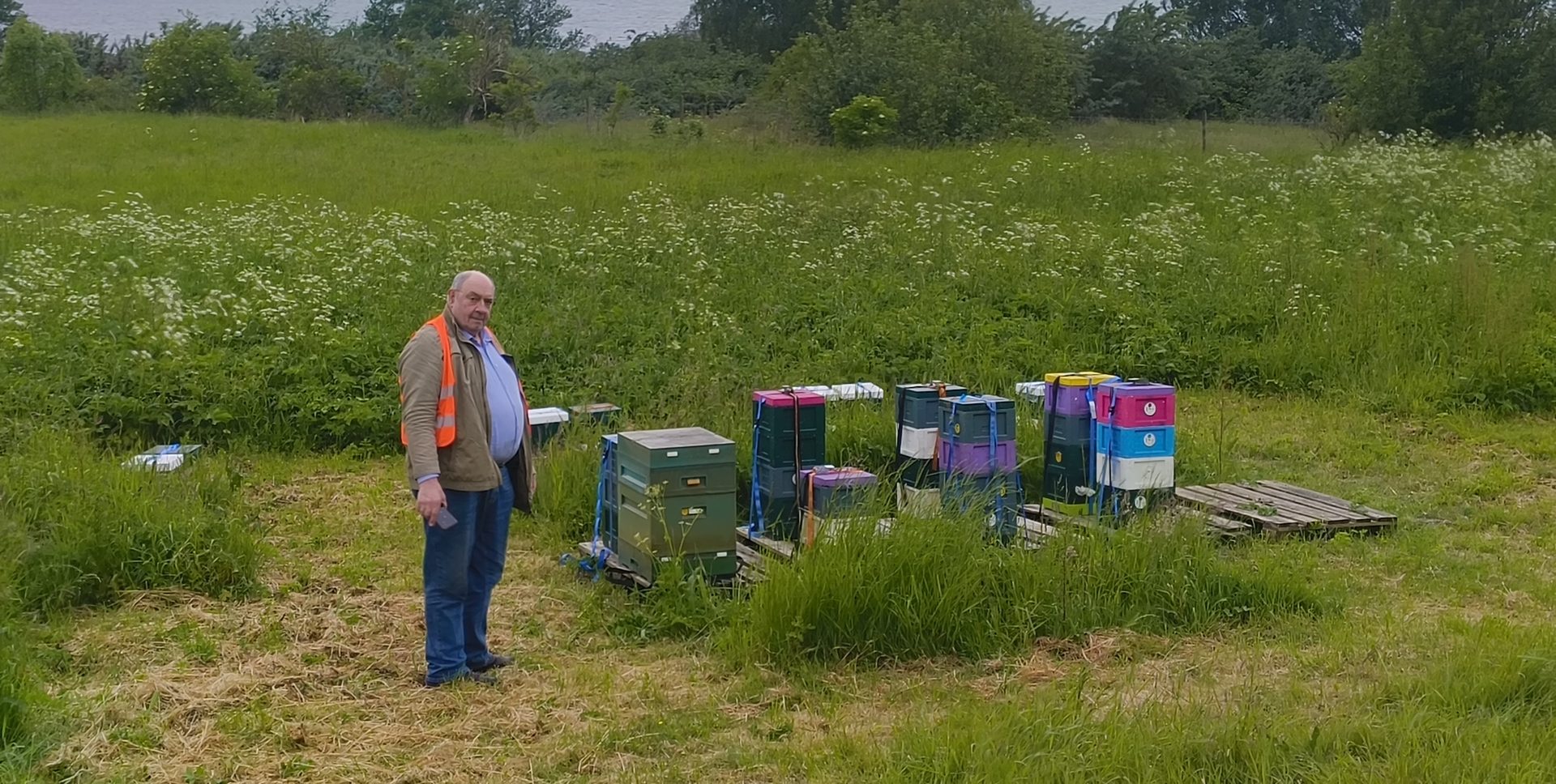
In the Oude Nassaubossen of Breda, we are working to restore the AMM to its wild state. We install log hives and place drone colonies along ecological corridors so that pure queens mate with pure drones.
The forests
- Mastbos
- Sint Annabos
- Liesbos
- Krabbebossen
- Speelhuisbos
- Kadettenkamp